Second blog
Yesterday I spent most of the day deploying Homelab’s blog
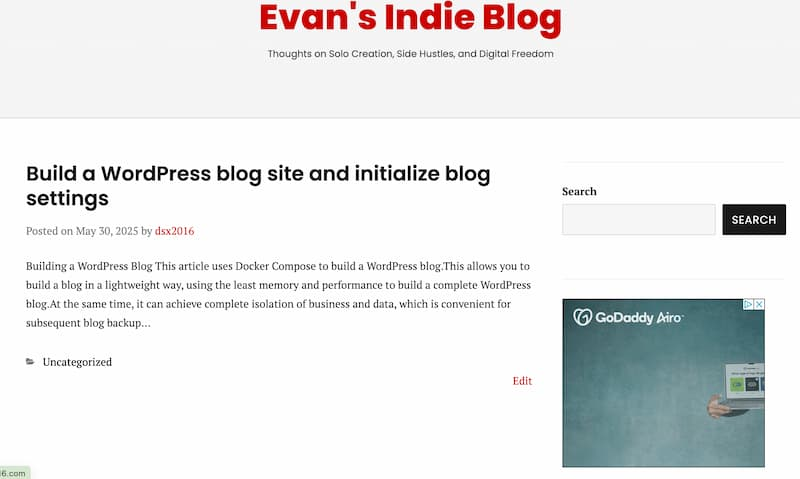
Today I created a second blog, mainly to record the WordPress blog itself, such as how to build WordPress, how to set up WordPress themes and plug-ins, how to SEO, content selection, Google ad settings, Google webmaster settings, data analysis and server options, server setup, frp proxy, etc.
Why build a second blog?
Because each blog has a specific theme, such as vlog, food, weight loss, dressing and makeup, technology, news, digital, financial management, etc.
Mixing them together is not only not conducive to SEO, but also does not provide a good reading experience, so each theme needs to be subdivided into a blog
Homelab is a large theme, and there are many sub-themes below
For example, WordPress independent blog, gateway proxy, smart home HomeAssistant, game server, etc.
Because the first content is to use Orange Pie 3B to deploy WordPress, so a separate WordPress blog is needed
The URL of the second blog
You can see that it is also a second-level domain name
Tool website
Independent blogs are content-based websites
Content websites need to be continuously updated, but tool websites only need to be continuously maintained
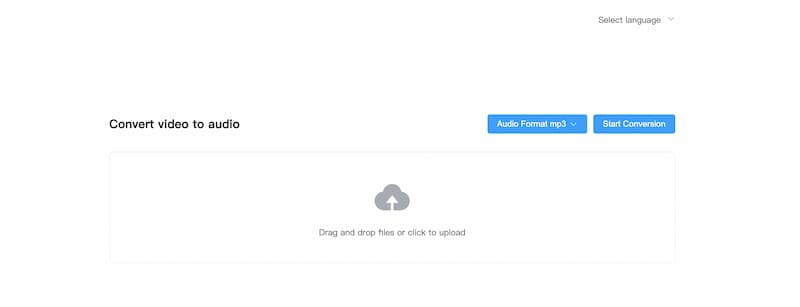
A simple tool website can save a lot of tedious steps and improve efficiency. It only needs to be built once and can even be used for ten years (compared with content websites, tool websites are obviously better)
Tool websites do not require data storage, do not require a lot of computing power, and can even use the computer resources of the front-end browser itself, and can be cached to the customer’s browser. For server deployment, only a small amount of storage and performance are required. Under less access, the performance of a 2GB server is more than enough
I have written many tool sites before, such as cropping pictures, cover screenshots, video transcoding, font transcoding, notes, to-do calendars, countdown tomato clocks, etc. Some are still in use, such as navigation sites, such as youtube cover pictures
Now I plan to reorganize the previous projects and deploy them on the Orange Pi 3B (2GB) server in my room, using Vultr cloud server to set up FRP proxy and intranet penetration to access public domain names.
Tips
That is to say, so far
There are 3 main heavy-duty physical devices
One is a Raspberry Pi 3B (1GB internal memory) as a network gateway, setting up a unified FRP proxy, etc.
One is an Orange Pi 3B (8GB memory) as a WordPress independent blog server (multiple blogs)
One is an Orange Pi 3B (2GB memory) as a tool website server, mainly deploying static websites and front-end website projects
There is one main cloud server
A Vultr cloud server Ubuntu Server24.04 (6 US dollars per month)